Why Early Planning is important to Office Dilapidations London Projects

A majority of tenants do not consider the expiry of their lease until they are faced with the six months left. That’s when the panic sets in. The postings of surveys by the landlord, the dilapidations schedule comes along and you have a price label that will turn your finance director pale. It is not only prudent to beat this game. It will save your business tens of thousands of pounds.

What Does It Take to Wait too Late?

Imagine the following scenario, you are three months away to end a lease. Your space has been already surveyed by the surveyor of the landlord and a schedule has been generated. You are looking at strip-outs, repairs, decoration, carpet replacement. Your contractor provides you with a price and a schedule. Unless the term of your lease is exceeded. You now have to negotiate extensions, hold-over rent, or still worse the landlord has taken over the works and sent you the bill with his mark-up on it.

Office dilapidations London projects do not occur instantly. It has planning, procurement, and coordination with the building management. There are buildings that admission of contractors is only on weekends. Strict loading bay times are associated with others. Access can be a nightmare if you happen to be in the City or the Canary Wharf.

Early is Better When It Comes to Choices.

You are in charge when you are planning over twelve months. The scope of works can be negotiated with the landlord. Occasionally they are already planning a renovation, and they do not need you to restore everything. That ceiling you removed? They might not care. The partition walls? Replacing the entire floor they are. 

Such discussions are cost effective. Real money. I have observed settlements being skewed in £200,000 to £40,000 since the tenant began talking prematurely. The landlord gets certainty. The tenant gets a discount. Everyone moves on.

You can also take time in getting competitive quotes. Rush jobs cost more. Contractors are aware that you are desperate and charge you so. Thinking and planning ahead and you will do better. You are able to compare experts, reference checks, make wise decisions rather than take whoever is around.

Is This Lease in Fact Full Reinstatement?

This is where people trip up. Not all leases require you to bare everything to bare concrete. There are yielding-up clauses which are quite flexible. Others designate some works to open them up. There is a difference between reading your lease correctly and having a surveyor, knowledgeable of office dilapidations London requirements.

Most of the leases claim that you must decorate during the last year. When you wait till month 11 you will be paying higher premium rates on decorators. Reserve them in month 8 and you would receive normal pricing. Same work. Different cost. It takes a lot of explaining when you say it but hundreds of tenants fall this way every year.

The issue of schedule building is also there. In case of multi-let, the landlord may be having three other tenants vacating at the same time. Contractors get booked up. Lift access is made competitive. The sooner you start planning your office dilapidations London, the sooner you are not competing over the resources.

What is the amount of planning time you really need?

In a small office of less than 2000 square feet, perhaps six months will suffice. You are speaking of primitive redecoration, some slight work. Nothing complicated. Anything larger, of course, you must have a year, particularly when you are already altered. You ought to be considering this when you are two years away at the expiry of your lease.

That is too much until you dissect it. Survey the space at 24 months. Get an idea of costs. Budget for year-end. Open negotiation with the landlord at 18 months. Speak with your surveyor when you are 12 months away. Tender the works at 9 months. Contractors appointed after 6 months. Full works 3 months prior to expiry of lease. That leaves you with breathing room in case something goes wrong.

Building works go wrong. Contractors find problems. Surveys indicate that asbestos is anywhere it is not supposed to be. Floor screeds require excessive time to dry up. Signage removal is a process that requires weeks in terms of planning permission. 

The Cost of Poor Planning

I have heard of an office dilapidations London company that procrastinated everything to the last moment. They were forced to pay their landlord £150,000 on a job that should have cost £60,000 had they carried out the same themselves. Their contractor was established by the landlord who had marked everything and the tenant had no bargaining power. The lease had ended. Game over.

Then there is the reputational aspect. The size of property markets is smaller than it appears. Landlords talk. Agents remember. It follows you, in case you are hard on office dilapidations London requirements. The next lease negotiation would become more difficult as you now have form of leaving spaces in bad conditions.

Early is everything: You have the story. You’re the reasonable tenant. You’ve engaged properly. You have sought to conceive solutions. You even have evidence of good faith, even though you may find yourself in a dispute. That is when the surveyors are negotiating settlements.

The most intelligent tenants learn how to consider dilapidations as their property strategy on the first day. On entry, they take pictures of the space. They check on changes that are approved by landlords. They keep good records. They are prepared when it is the time to exit. No surprises. No panic. Simply being a professional completion of your office dilapidations London needs and a clean break.

You do not plan early because you simply like management of projects. You do it since the other alternative is costly, traumatising, and entirely avoidable.

Transforming Business Environments Through Modern Office Design

The physical spaces where employees gather shape corporate culture, productivity, satisfaction and even a company’s bottom line. Once dominated by stale cubicles and closed-door corner offices, the modern workplace continues rapid evolution. Transformative design prioritizes flexible functionality, health and wellness, technology integration and customisation reflecting brand identity.

By applying strategic office interior design concepts aligned with how modern teams actually work, companies transform traditional business environments into inspirational spaces positioning organisations to thrive.

Adopt an Open Layout
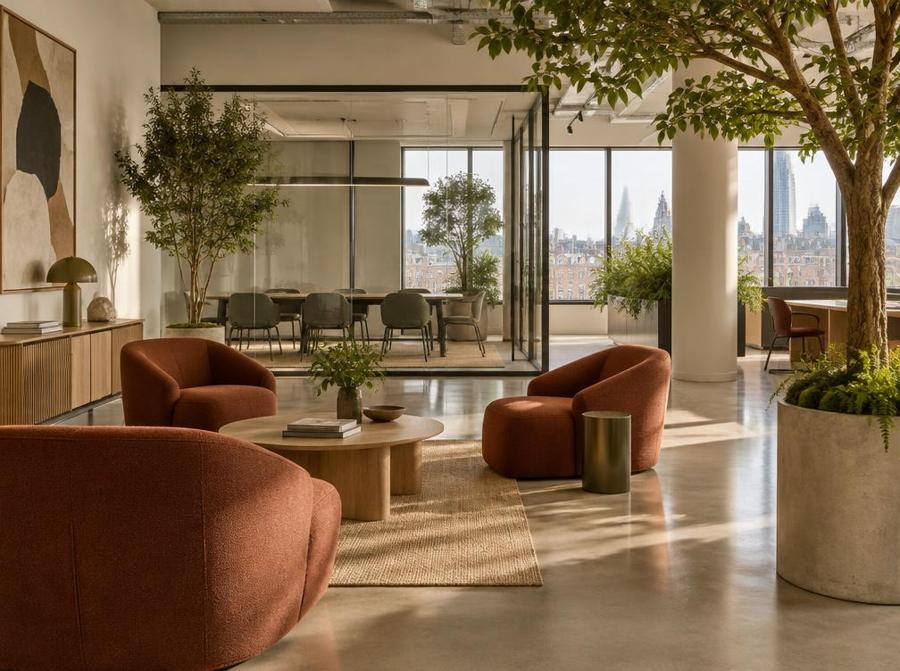
Today’s collabrative digital work calls for spaces conducive to connecting versus isolating teams. An open concept floorplan eliminates much of the closed-door division between departments and leadership seen in outdated offices. Centralised common spaces, communal tables and soft-seating lounge areas bring colleagues together, reinforce community and spark creativity.

While meta-analysis indicates completely open offices inevitably lead to distraction and burnout without balance, adjustable architectural elements create hybrid work zones. Think: glass walls instead of soaring opaque partitions. The goal is sightline visibility between team members balanced with flexible privacy options when required. Employees gain autonomy over where and how they work best.

Support Workstyle Diversity
Just like consumer technology, office spaces continue incredible gains in flexibility to address diverse needs. Hot-desking spaces serve employees who split time between corporate offices, home and client sites. High-tech hoteling workstations allow reservation of adaptable areas for long-term projects or meetings. Focus rooms provide quiet individual space to think, write and create.

Varied workstyles harmoniously integrate in environments where any employee can select the zone matching immediate needs – collaboration, concentration, innovation or even rejuvenation.

Make Ergonomic Upgrades
Mounting research spotlights how elements like air quality, proper lighting, noise and workspace ergonomics significantly impact employee health, retention and performance. Modern designs place a premium on healthy spaces supported by sit/stand adjustable desks, stability balls instead of chairs, wrist pads and monitor raises to prevent strain. Touchdown spaces allow shifting locations throughout the day. Proper ventilation and air filtration create comfortable humidity and temperature along with oxygenation for improved thinking.

Integrate Soft Architecture
While essential, work cannot fill every employee need or working hour. Soft architecture in the form of refuge spaces addresses the human requirement for down time. Think meditation rooms, mothers’ suites for private pumping, wellness centers with access to outdoor views orfitness facilities and designated nap nooks. These humane spaces improve focus, motivation and morale while providing personal recharge time. Even small tiered auditorium environments double as informal gathering spots during breaks.

Bridge Physical and Technological
Eventually even cutting-edge office technology gets outpaced as new innovations enter mainstream enterprise. Modern construction focuses on flexibility and built-in capacity to effortlessly scale and upgrade spaces as needed. Expect movable architectural walls, raised floors with underlying infrastructure channels ready for rewiring and modular furniture. Integrated floor-to-ceiling whiteboards, LED ambient lighting schemes and ceiling-mounted projectors activate spaces as interactive innovation hubs. Networked smart home capabilities even manage real-time occupancy sensors and environmental controls from mobile devices.

While dazzling finishes and artistic light fixtures inject personality, modern office design connects far deeper than skin deep. Employee-centric construction optimising how people actually work, interact and recharge sets the foundation. Layering customisation and technology upon highly functional spaces ultimately transforms businesses by uniting, empowering and inspiring the talented humans powering companies forward.

From Concept to Workspace: Navigating the Latest Trends in Business Office Interior Design

Whether moving into a new commercial space or renovating an existing office, designing a functional yet inspiring workspace requires balancing data-driven planning with creativity. The needs of your business, employees and clients along with the latest workplace design trends all significantly impact creating an environment that works across the board. From forward-thinking layouts to small decorative details that make a difference, office interior design is an ever-evolving art and science.

Assess Needs First
Rather than simply replicate what’s trendy or visually striking, interior architects always start with fully assessing functionality needs for the space based on how your teams work. Will primarily house independent focus work? Facilitate meetings and collaboration? A mix of both? Design begins with this insider understanding before aesthetic additions. Space planning experts look at company org charts, employee types, standardised roles and more.

Incorporate the Latest Solutions
In recent years, global workplace disruption led to major innovation. Designers continually integrate new ways to allow flexible yet productive work scenarios across offices, at home and beyond. Expectations now include more open, reconfigurable spaces along with private zones plus integrated technology. When embarking on office design, think ahead of not just present needs but how your business may evolve.

Focus on Natural Light and Views
Humans connect better to spaces intermingling with nature rather than boxed off from the outdoors. Desks and work stations intentionally shift towards windows and skylights. Even interior offices benefit from glass walls that borrow light from neighboring spaces. Carefully placed light fixtures supplement when natural light falls short to keep energy levels up.

Promote Health and Wellbeing
Design decisions running the gamut from lighting schemes to air ventilation impacts employee health, satisfaction and performance. Expect greenery and biophilic accents along with sit/stand desks or stability ball seating. Mother’s rooms for new moms, clean air solutions and ergonomic layouts also contribute to positive environment.

Make Meetings Multifunctional
Savvy space planning ensures meeting rooms efficiently pull double or triple duty if needed. A large boardroom outfit with interactive smart screens may also serve a training room with flexible furniture arrangements. Hoteling workstations allow customisable temporary spaces to accommodate meetings. Every inch maximises utility.

Infuse Brand Personality
WhileFUNCTION takes priority, accents like décor, furnishings and colour schemes allow infusion of company culture and brand identity. Local artwork decorates walls. Comfortable common area seating reflects style. Even non-csr-facing teams connect deeper to brand purpose through environmental graphics, vision/value signage and displays from company events and community service outreach. First impressions for client meetings solidify your identity and what sets you apart.

The physical spaces teams occupy day in and day out inevitably contributes to how effectively any business operates. Yet workplace design constantly evolves introducing new possibilities in how to most strategically configure your company environment. Artfully weaving in latest solutions ensures both form and impressive function under one roof.

Giving Your Office a Makeover – Tips for Interior Fit Outs

Looking to spruce up your living space but not sure where to start? An interior fit out can transform the look and feel of your office through thoughtful design updates tailored to your taste. Whether renovating a single room or doing a whole-office refresh, careful planning helps ensure the desired outcome. Read on for tips to make your next interior fit out a success from design to completion.  

Start by Clearly Defining Goals

Having a clear vision upfront streamlines decision making later. Determine specific problem areas that need improvement or the overall aesthetic you wish to achieve. Set a budget so upgrades align with what you can realistically afford. Be specific – “update my boring kitchen” is too vague while “create a modern, industrial look in the kitchen on a £8,000 budget” provides direction.

Understand Your Design Style  

Part of clarifying your vision involves defining your personal interior design style. If unfamiliar with the terminology, resources like online quizzes can help categorize your preference as modern, cottagecore, minimalist, traditional, contemporary or eclectic based on factors like furniture, colour palette and accessories you’re visually drawn to. This gives designers insight on how to tailor spaces to match your taste. 

Review Inspiring Design Concepts

Now is the exciting part – browsing Pinterest boards, Houzz photos, Instagram accounts and design magazines to gather inspiration! Don’t be afraid to think ambitiously about an interior fit out. If going for an urban loft look, industrial elements like exposed piping or brickwork can transform a room. Just be mindful of structural limitations in framing a realistic vision. Save images of room layouts, paint colours, flooring options and anything else that appeals to you in a digital inspiration folder for easy reference. 

Hire the Right Remodelling Professionals

Unless you possess keen DIY skills, hiring experienced tradespeople ensures work is completed properly. For large interior fit outs, seek referrals to find interior designers and contractors suited to execute your vision while minding timelines and costs. Meet with a few, share your goals and browse their work samples before deciding on help. Be upfront with budgets and expected timeframes. Hiring local pros familiar with regulations also smooths required permitting and inspection processes. 

Plan Appropriately for Disruption 

Depending on the interior fit out’s scale, be prepared for some domestic disruption like temporary loss of kitchen or bathroom access if upgrades occur in inhabited spaces. Discuss timeframes for fixture/flooring installation, paint drying times and furniture delivery lead times to understand the sequence. Plan accordingly by clearing rooms/belongings that could get dusty or damaged. Budget eating out if the kitchen gets renovated. Though inconvenient, remember completed rooms will feel that much sweeter having powered through the temporary madness!

The process requires patience but the payoff of transformed living spaces makes interior fit outs worthwhile. With clear goals, design inspiration and help from the right professionals, you’ll be enjoying an upgraded home before you know it! Reach out if you have questions – happy to offer suggestions to help your next remodel go smoothly.